
Why Speed Matters in Allogeneic Cell Therapy Fill & Finish
And how faster filling protects product quality, reduces risk, and improves scalability
As allogeneic (“off the shelf”) cell therapies continue to expand, manufacturing teams face a clear challenge: produce more doses, faster, without compromising quality.
Fill & finish is one of the final steps before a therapy reaches storage, shipment, and ultimately the patient. At this stage, the product has already absorbed significant time, labor, and cost. That is why speed during fill & finish is not just a productivity metric. It is a critical part of protecting the therapy itself.
The Fill & Finish Window Is High Stakes
Cell therapy products are inherently sensitive. They can be affected by time, temperature shifts, handling steps, and exposure risk. Fill & finish often happens at a point where manufacturing teams are racing against stability constraints and operational pressure. When filling takes too long, the entire process becomes more vulnerable, especially at higher volumes.
Speed Helps Protect Cell Quality
The longer a product spends in processing and filling conditions, the more chances there are for unwanted changes that could impact performance.
A faster fill & finish process helps manufacturing teams keep tighter control over conditions from the first unit filled to the last. That consistency can support overall product quality and improve confidence in the final drug product.
Faster Filling Reduces Risk
Fill & finish is also a step where contamination control and repeatability matter most. Extended fill cycles create more opportunity for interruptions, process variability, and operator driven risk.
By shortening fill time, teams can reduce the length of exposure and complete critical steps more efficiently, helping maintain a controlled process and reliable outcomes.
Speed Is the Difference Between Working and Scaling
In early development, slower fill times may be manageable. But as production ramps, throughput becomes a real barrier.
Manufacturers scaling allogeneic cell therapy need fill & finish systems that can keep up with increasing batch volumes without turning into a bottleneck. That is where speed becomes essential, not just for convenience, but for scalability.
High Throughput Without Compromising Control
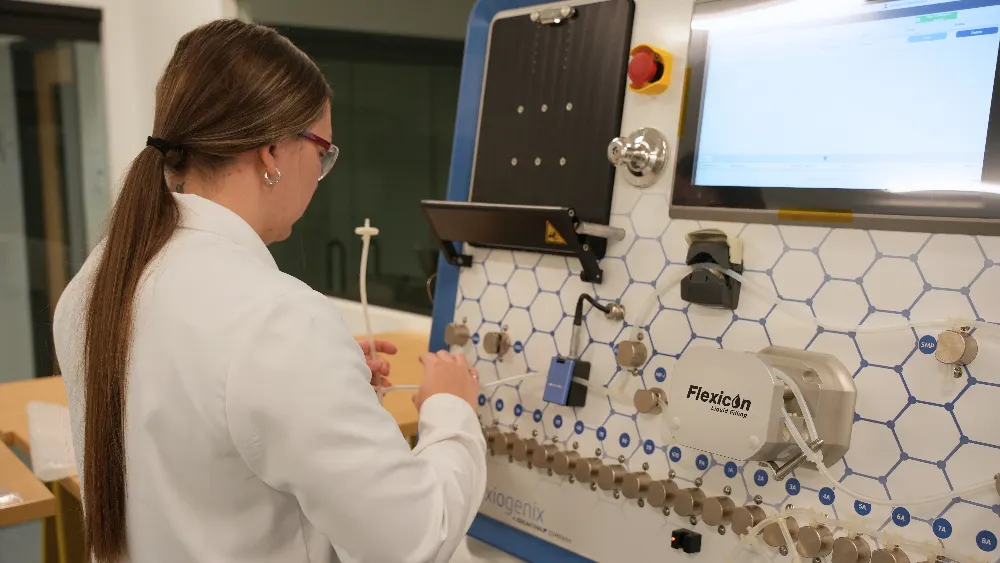
At Xiogenix, we designed the ARES X20+ for modern cell therapy manufacturing, where speed must coexist with precision and consistency.
The ARES X20+ can fill 100 bags in under an hour, helping teams increase throughput while maintaining a controlled and repeatable fill process.
Final Thoughts: Speed Supports Growth and Reliability
In cell therapy, manufacturing decisions have a direct impact on timelines, scale, and the ability to deliver product consistently.
When fill & finish is optimized for speed, teams gain more control, reduce risk, and improve readiness for growth. And in a field where schedules matter and patients are waiting, every improvement counts.